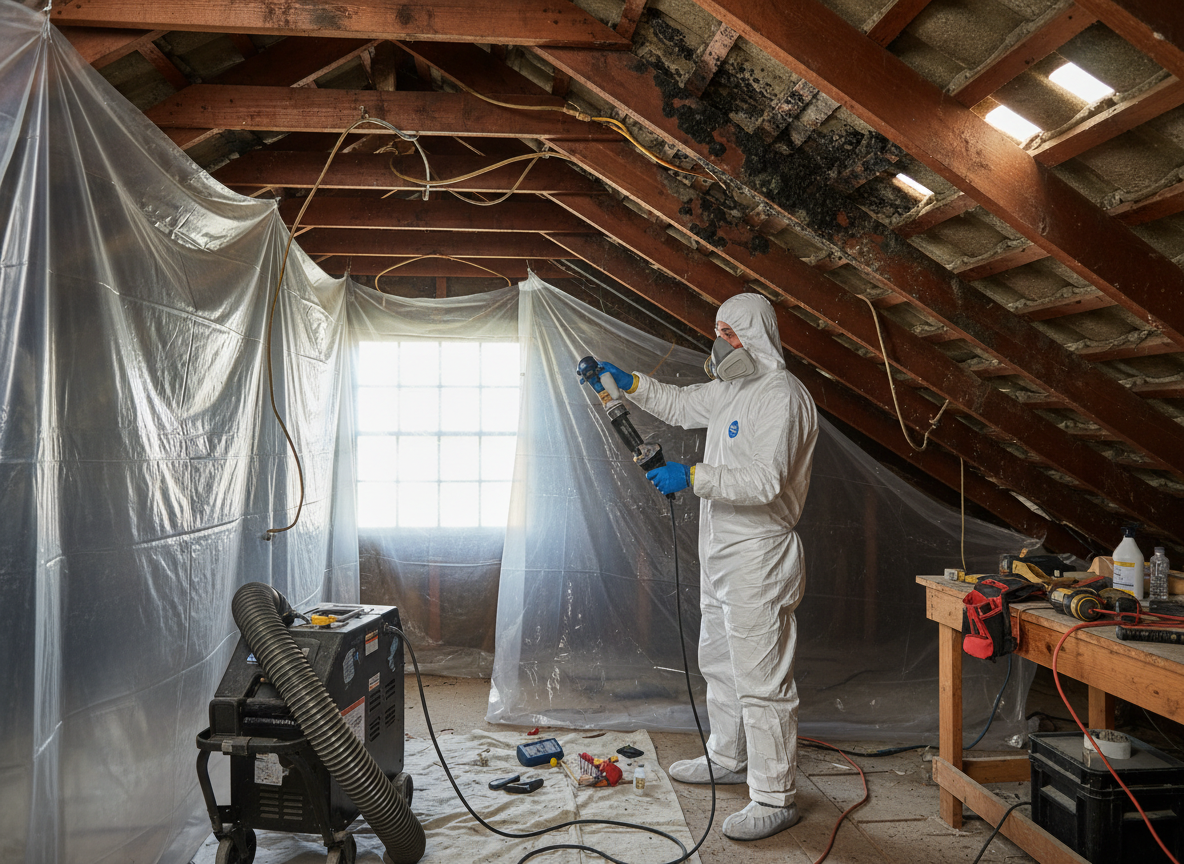
Homes in Lomas Santa Fe and Solana Highlands often feature older roof decking and fiberglass batt insulation that trap moisture from the mild Mediterranean climate and ocean fog rolling in from Fletcher Cove Park. Attic mold testing begins with moisture mapping and air sampling to identify hidden growth behind HVAC ducts or along the coastal rail trail side exposures where salt air accelerates condensation. Removal requires containment barriers and HEPA filtration to prevent spores from drifting into living spaces below, especially critical in single-story ranch homes common throughout Solana Beach.
Edge cases arise near San Elijo Lagoon where higher ambient humidity combines with poor ridge vent placement in 1970s-1980s builds, allowing mold to colonize OSB sheathing. Technicians must verify proper ventilation upgrades during removal to avoid recurrence, and all work follows San Diego County guidelines for handling contaminated insulation without disturbing asbestos-containing materials sometimes present in pre-1980 attics. Homeowners in Encinitas or Del Mar frequently call after noticing musty odors during winter marine layer events.
Seasonal Guidance
Ocean influence keeps relative humidity elevated year-round, but fall and winter bring the highest risk as cooler nights increase attic condensation. Inspect before the rainy season and after any roof leak repairs near Carlsbad or Del Mar borders. Focus on south-facing slopes where solar heat gain can dry surfaces unevenly and mask ongoing moisture issues.
Technician insight
In Solana Beach, the thing that catches most people out with attic mold testing and removal is the way ocean-driven humidity sneaks into Lomas Santa Fe attics through undersized soffit vents on older homes, turning a small leak near the San Elijo Lagoon side into widespread growth on the north slope before anyone notices.
Downtown Solana Beach Attic Job
A homeowner in Downtown Solana Beach noticed a musty smell after heavy marine layer fog. Inspection revealed condensation on roof decking and mold on insulation near the ridge. We contained the space, removed affected materials, cleaned surfaces, and added ridge vent extensions. Follow-up testing confirmed clearance with improved airflow.
How it works
- 1
Initial Inspection
Visual assessment and moisture readings throughout the attic space using calibrated meters.
- 2
Testing and Sampling
Surface and air samples collected and analyzed to confirm mold types and extent.
- 3
Containment Setup
Negative air pressure and plastic barriers isolate the work area from the rest of the home.
- 4
Removal and Cleaning
Affected insulation and materials removed followed by HEPA vacuuming and antimicrobial treatment.
- 5
Verification and Prevention
Post-remediation testing and recommendations for ventilation or dehumidification improvements.
Pricing
Upfront quotes after inspection; pricing depends on attic size, mold extent, and access difficulty.