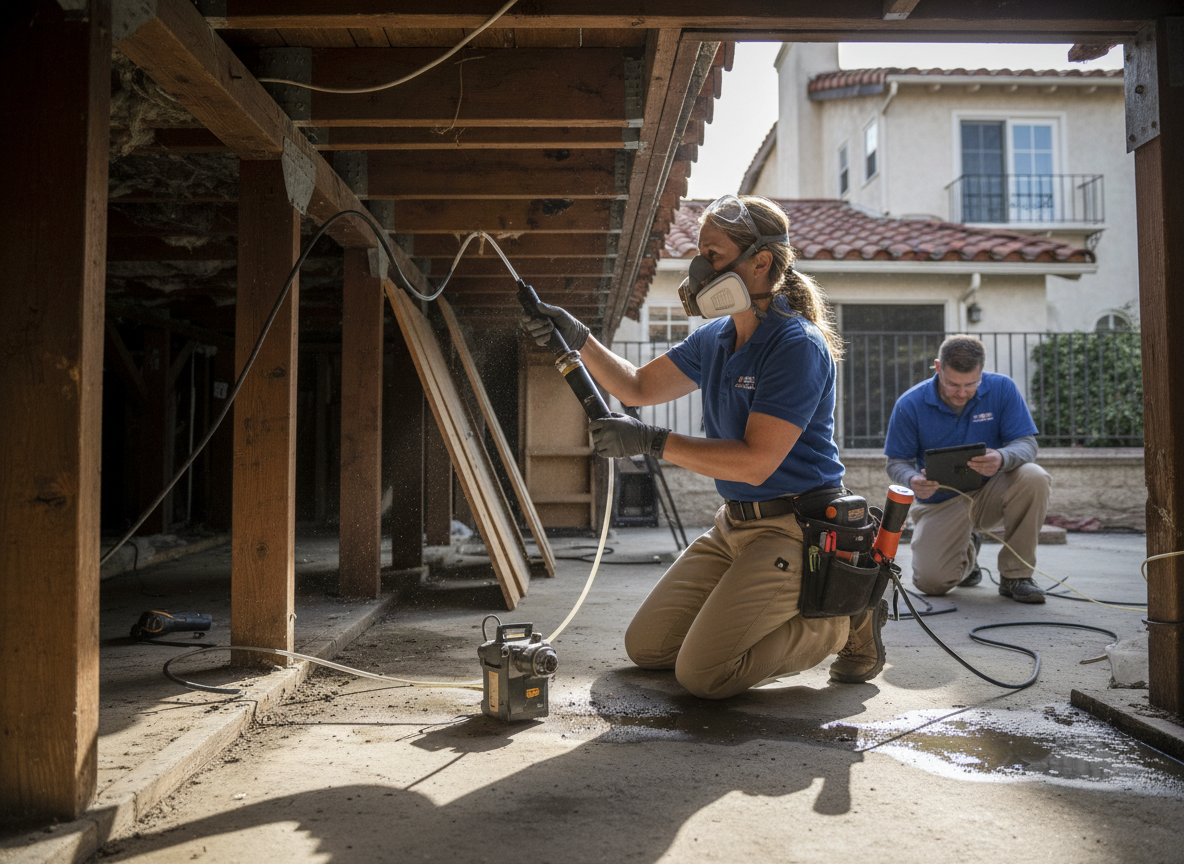
Solana Beach homes in neighborhoods like Lomas Santa Fe and Solana Highlands often feature 1960s-1980s construction with crawl spaces and attics that trap moisture from the mild coastal Mediterranean climate. Ocean breezes keep relative humidity elevated even in winter, allowing mold to develop behind drywall or in insulation near the San Elijo Lagoon where groundwater seepage is common. A certified mold inspector must map these hidden moisture paths rather than relying on surface checks alone, especially in properties close to the Solana Beach Coastal Rail Trail where salt air accelerates material breakdown.
Inspection protocols here account for the county's building codes on ventilation and the terrain slopes that direct runoff toward foundations in Downtown Solana Beach. Edge cases frequently include HVAC systems drawing in humid air from nearby Encinitas or Del Mar, creating condensation points in ductwork that standard remediation overlooks. Inspectors document these conditions with moisture meters and thermal imaging to provide actionable reports that distinguish between active growth and past staining before any cleanup begins.
Homeowners in Carlsbad-adjacent areas sometimes confuse cosmetic mildew with structural mold issues tied to roof leaks common after seasonal fog. Proper inspection identifies whether the problem stems from the home's age-related envelope failures or from landscaping that holds water against stucco walls. This prevents unnecessary full-home treatments while ensuring targeted fixes address the actual source in the specific microclimate of Solana Beach.
Technician insight
In Solana Beach, the thing that catches most people out with certified mold inspector is how the constant ocean influence keeps crawl spaces under 1970s homes in Solana Highlands damp even during dry months, leading owners to miss growth until it reaches living areas near Fletcher Cove Park.
Hidden Growth in Lomas Santa Fe Crawl Space
A homeowner noticed recurring musty smells after rain near San Elijo Lagoon. Inspection located elevated moisture and mold colonies along the foundation of a 1970s home due to poor grading and coastal humidity. Targeted sampling confirmed the extent without disturbing finished surfaces. The report guided precise remediation that eliminated the source while preserving original construction details.
How it works
- 1
Initial Consultation and Access Review
Discuss visible symptoms and review property history while confirming access to attics, crawl spaces, and HVAC systems typical in Solana Beach homes.
- 2
Visual and Moisture Assessment
Conduct room-by-room inspection using meters to locate elevated moisture levels influenced by ocean humidity and local drainage patterns.
- 3
Sampling and Documentation
Collect air or surface samples where needed and photograph conditions for a detailed report covering neighborhoods like Lomas Santa Fe.
- 4
Findings Review and Recommendations
Explain results on-site and outline next steps for remediation or ventilation improvements suited to the coastal Mediterranean conditions.
Pricing
Upfront quotes based on square footage, access difficulty, and number of samples required.