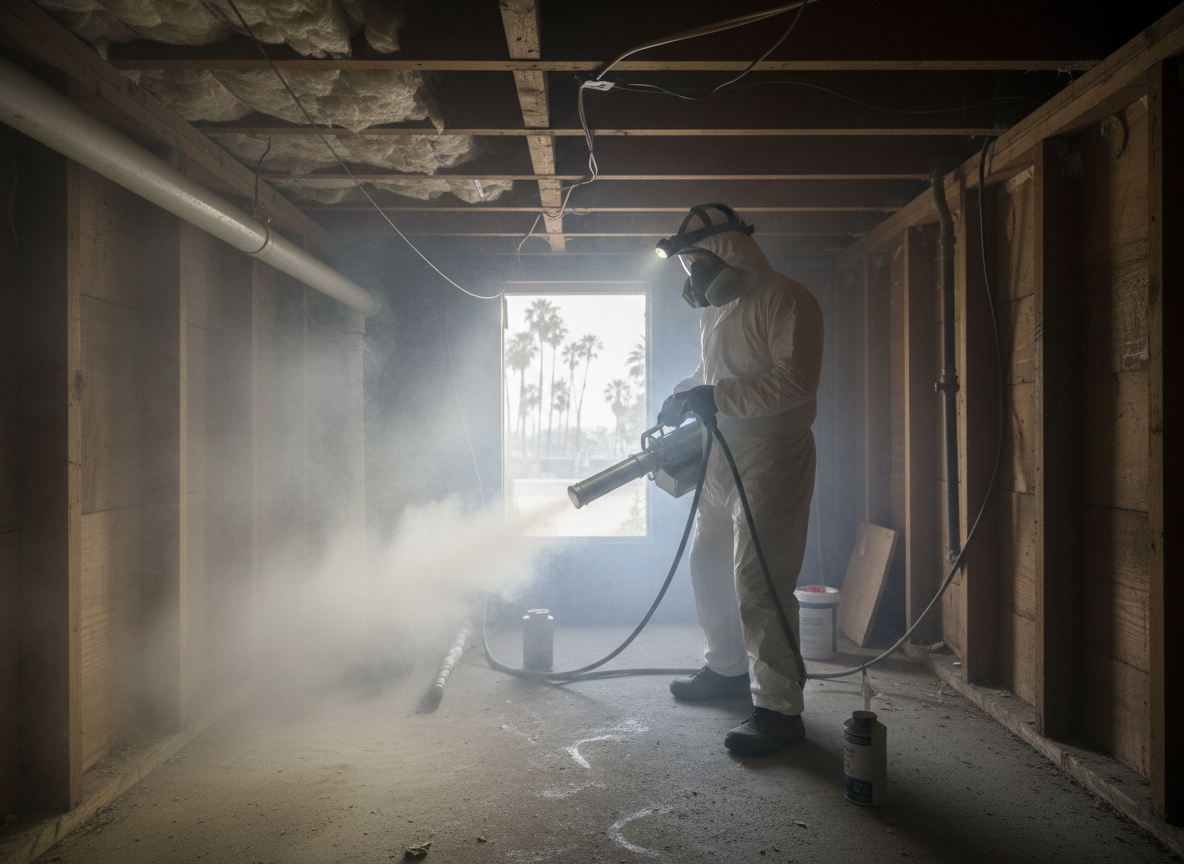
In Solana Beach homes built along Lomas Santa Fe Drive and near the San Elijo Lagoon, mold fogging treatment addresses spores that settle in wall cavities and under flooring after winter rains raise indoor humidity. The mild coastal Mediterranean climate keeps temperatures moderate year-round, so moisture lingers longer than in inland San Diego County neighborhoods, allowing colonies to spread through HVAC systems common in Solana Highlands properties. Technicians select EPA-registered fogging agents that penetrate porous materials without leaving residue that could affect ocean breezes entering open windows. Edge cases include older single-story ranch homes where fog must reach crawl spaces without disturbing nearby coastal rail trail wildlife corridors.
Fogging works best after source removal, yet many Encinitas and Del Mar residents attempt it first and miss hidden growth behind tile in bathrooms near Fletcher Cove Park. Proper application requires sealing the structure for the labeled dwell time while monitoring for drift toward neighboring Carlsbad properties. Technicians test post-treatment with moisture meters and air sampling to confirm levels drop below thresholds that trigger re-growth during summer fog events. Warning signs that fogging alone will fail include recurring musty odors near the Coastal Rail Trail where groundwater seepage keeps soil damp against foundations.
Code considerations in Solana Beach require proper ventilation after treatment to avoid trapping vapors in tightly sealed coastal homes. Materials such as cellulose insulation in attics absorb fog unevenly, so crews often combine fogging with targeted HEPA vacuuming in Downtown Solana Beach residences. Homeowners should expect temporary relocation of pets and plants during the process because the agents can irritate sensitive coastal wildlife that frequents nearby lagoons.
Seasonal timing matters because spring marine layers increase ambient moisture and reduce the effectiveness window for fogging. Crews schedule follow-up visits within 48 hours to verify no rebound growth occurs in the humid microclimates around Solana Beach.
Technician insight
In Solana Beach the thing that catches most people out with mold fogging treatment is underestimating how the constant ocean influence keeps crawl spaces and attics above 60 percent humidity even after the fog disperses. Homes in Lomas Santa Fe and near the lagoon often need a second pass because marine layers roll in overnight and re-wet surfaces that were just treated.
Hidden Growth in Coastal Crawl Space
A Solana Highlands homeowner noticed musty air after heavy winter rain. Inspection revealed colonies on joists under a bathroom near the San Elijo Lagoon where fog from the ocean kept wood damp. We contained the space, applied fog through the subfloor, and verified clearance with air samples. The odor disappeared and humidity stayed controlled once vents were adjusted for the local climate.
How it works
- 1
Initial Assessment
Technicians inspect affected zones in homes near Lomas Santa Fe Drive, checking humidity levels influenced by proximity to the San Elijo Lagoon.
- 2
Containment Setup
Plastic barriers and negative air machines isolate the treatment area to prevent spore migration toward neighboring properties in Solana Highlands.
- 3
Fog Application
EPA-registered fog is dispersed through HVAC and wall cavities for the required contact time while monitoring for drift in the coastal breeze.
- 4
Verification and Clearance
Post-treatment air and surface samples confirm spore reduction before reopening spaces in homes near Fletcher Cove Park.
Pricing
Cost depends on square footage treated and whether source removal precedes fogging; obtain an on-site assessment for accurate scope.