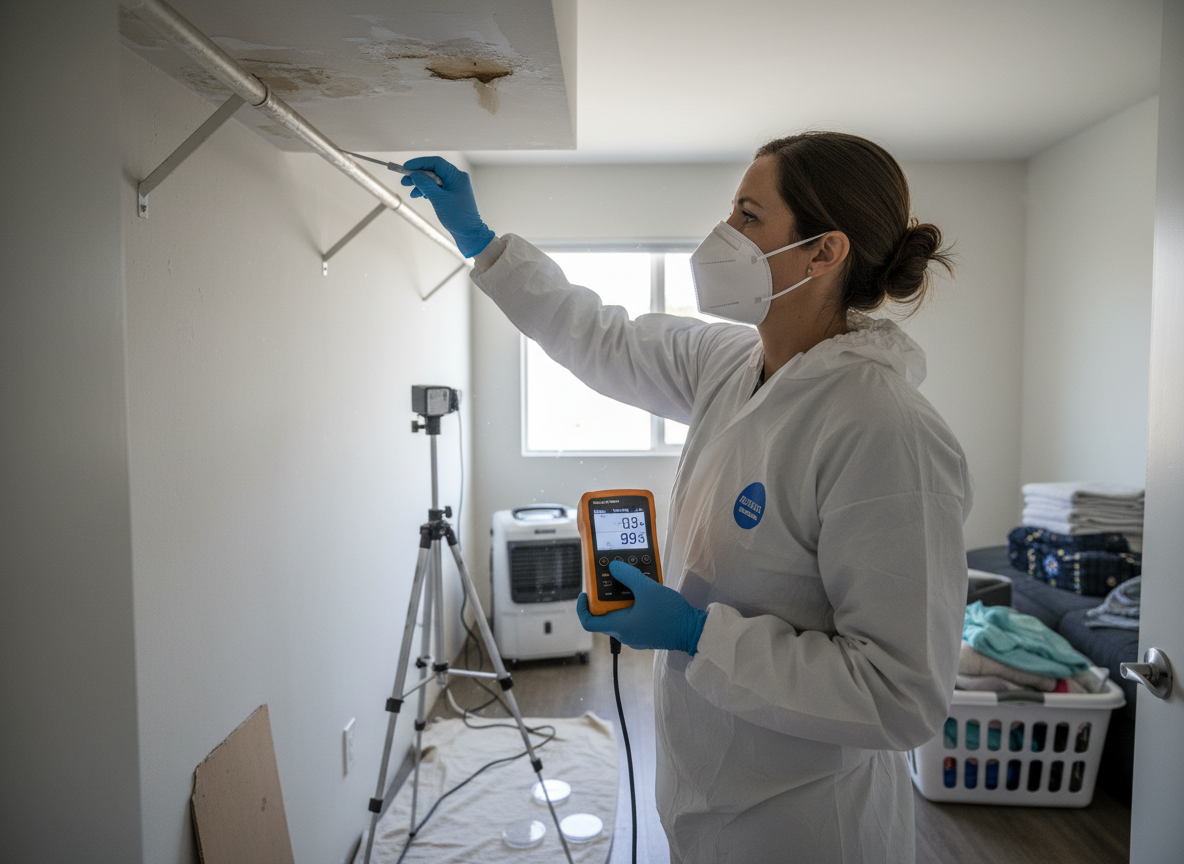
Solana Beach homes in Lomas Santa Fe and Solana Highlands often feature 1970s-1990s construction with crawl spaces and stucco exteriors that trap moisture from the mild coastal Mediterranean climate. Ocean influence keeps relative humidity elevated year-round, especially near San Elijo Lagoon and the Coastal Rail Trail, allowing hidden mold growth behind drywall or in attics after minor roof leaks or poor ventilation. Residential mold testing here requires air sampling combined with moisture mapping and surface swabs to identify species common in San Diego County coastal zones rather than relying on visual checks alone.
Testing protocols must account for wind-driven salt air accelerating corrosion on HVAC components and the way Del Mar and Encinitas border properties share drainage patterns that push water toward lower lots in Downtown Solana Beach. Edge cases include false negatives from recent painting or cleaning that masks active colonies, and the need to differentiate between outdoor mold spores entering through open coastal windows versus indoor amplification. Proper chain-of-custody documentation and lab analysis through accredited facilities ensures results hold up if remediation or insurance claims become necessary.
Homeowners sometimes overlook testing in guest houses or detached garages common on larger Solana Beach lots, where irrigation near Fletcher Cove Park keeps soil moisture high. We always test multiple zones and compare indoor versus outdoor spore counts because the consistent ocean breeze can mask problems until concentrations spike after a rare heavy rain. This approach prevents unnecessary remediation while catching growth early in older single-story ranches that dominate the neighborhood.
Technician insight
In Solana Beach, the thing that catches most people out with Residential mold testing is how the constant ocean humidity and proximity to San Elijo Lagoon keep soil and crawl spaces damp even in dry months, so testing only after a visible leak often misses the real source in Lomas Santa Fe homes built on older lots.
Hidden Growth Behind Stucco in Solana Highlands
A homeowner noticed musty odors after winter rains but no visible stains. Testing revealed elevated aspergillus in the wall cavity where irrigation runoff from the neighboring lot had saturated the stucco base. We mapped moisture levels, took targeted samples, and confirmed the colony through lab results. The report allowed targeted removal without whole-house disruption.
How it works
- 1
Initial Consultation And Site Walk
Review property history and visible moisture concerns while walking through living spaces, crawl space, and attic in Solana Beach homes.
- 2
Moisture Mapping And Sampling
Use meters and thermal imaging to locate hidden damp areas, then collect air and surface samples from multiple zones including near San Elijo Lagoon influences.
- 3
Laboratory Analysis
Send samples to an independent lab for species identification and concentration comparison against outdoor baselines typical for coastal San Diego.
- 4
Detailed Reporting And Recommendations
Provide written findings with photos, lab results, and clear next steps tailored to the home's age and location in Lomas Santa Fe or Downtown Solana Beach.
Pricing
Pricing depends on square footage, number of samples required, and property access challenges common in coastal Solana Beach homes; contact for an upfront quote.