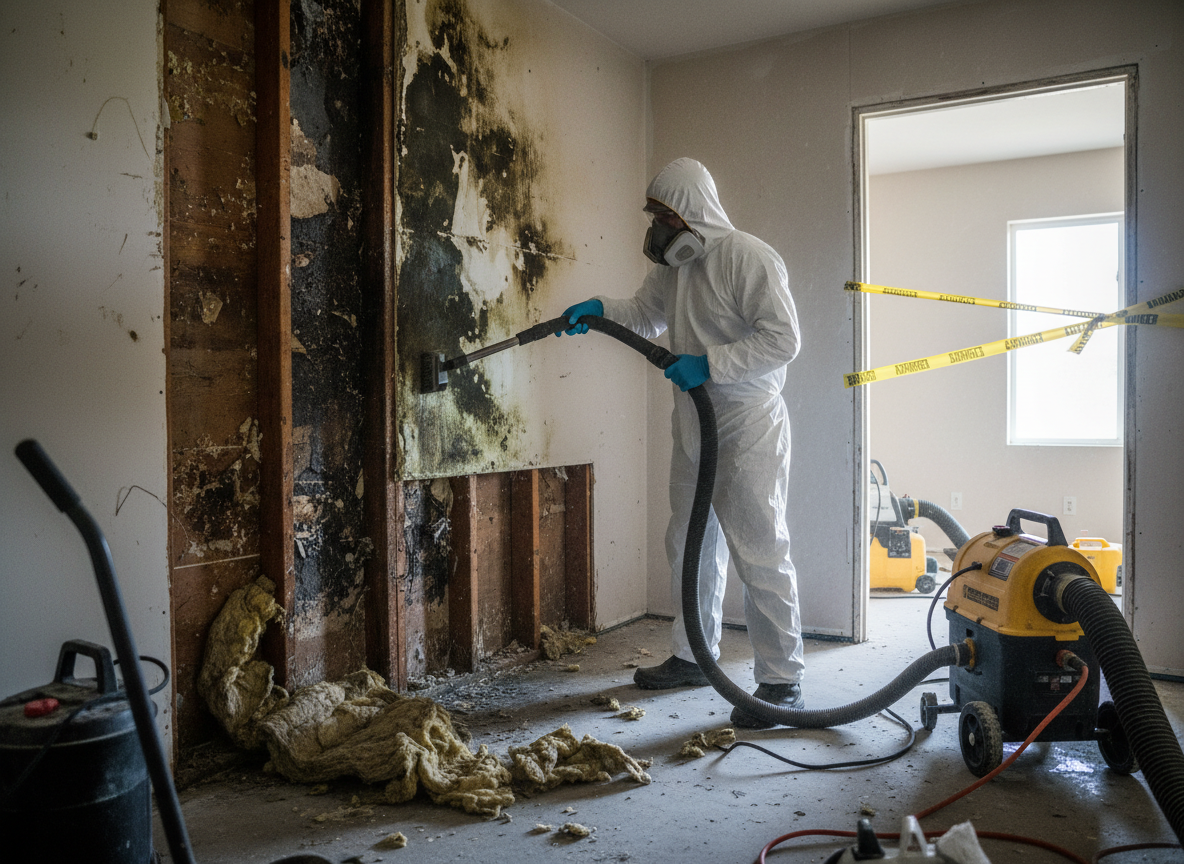
Water intrusion in Solana Beach homes often starts with roof leaks or plumbing failures in older stock found in Lomas Santa Fe and Solana Highlands. Ocean-driven humidity from the mild Mediterranean climate keeps wood framing and drywall damp longer than inland San Diego spots, allowing mold to colonize behind baseboards and in HVAC returns. Technicians must pull affected materials to the studs, bag debris on site, and run negative air machines to protect adjacent rooms in single-story ranch homes common here.
San Elijo Lagoon proximity adds another layer because tidal fluctuations raise groundwater levels that press against foundations in Downtown Solana Beach. This creates hidden moisture pockets under slab-on-grade floors that standard moisture meters miss without infrared scans. Remediation crews cut ventilation slots at the slab edge, apply antimicrobial coatings rated for coastal salt air, and install dehumidifiers calibrated for 65-70 percent relative humidity to stop regrowth before drywall replacement.
Nearby Encinitas and Del Mar homes share similar rail-trail drainage issues that funnel rainwater toward property lines. When water pools against stucco walls, mold travels upward into attic insulation. The process requires removing saturated cellulose, treating joists with borate solutions, and verifying clearance with post-remediation air sampling before homeowners return furniture.
Technician insight
In Solana Beach, the thing that catches most people out with water damage mold remediation is how the constant ocean breeze keeps relative humidity above 65 percent even in winter, so crawl spaces under 1970s homes in Lomas Santa Fe never fully dry without mechanical help.
Slab Leak Near Fletcher Cove Park
A homeowner noticed musty odors after a pipe leak under the slab. Inspection revealed mold growth along the foundation edge due to lagoon-influenced groundwater. Crews removed baseboards, treated joists, and ran dehumidifiers for five days until readings dropped below 15 percent. Air clearance passed and the space was cleared for new flooring.
How it works
- 1
Initial Assessment
Inspect for water sources and visible mold using moisture meters and infrared imaging around crawl spaces and attics.
- 2
Containment Setup
Isolate affected zones with plastic sheeting and negative air pressure to prevent spore spread to unaffected rooms.
- 3
Material Removal
Cut out and bag water-damaged drywall, insulation, and baseboards while treating exposed framing.
- 4
Drying and Verification
Deploy air movers and dehumidifiers, then confirm moisture levels and air quality before reconstruction.
Pricing
Cost depends on square footage affected, depth of hidden growth, and drying duration required by coastal humidity.