2026-10-22 ·
Mold Growth After Winter Rains In Solana Beach Homes
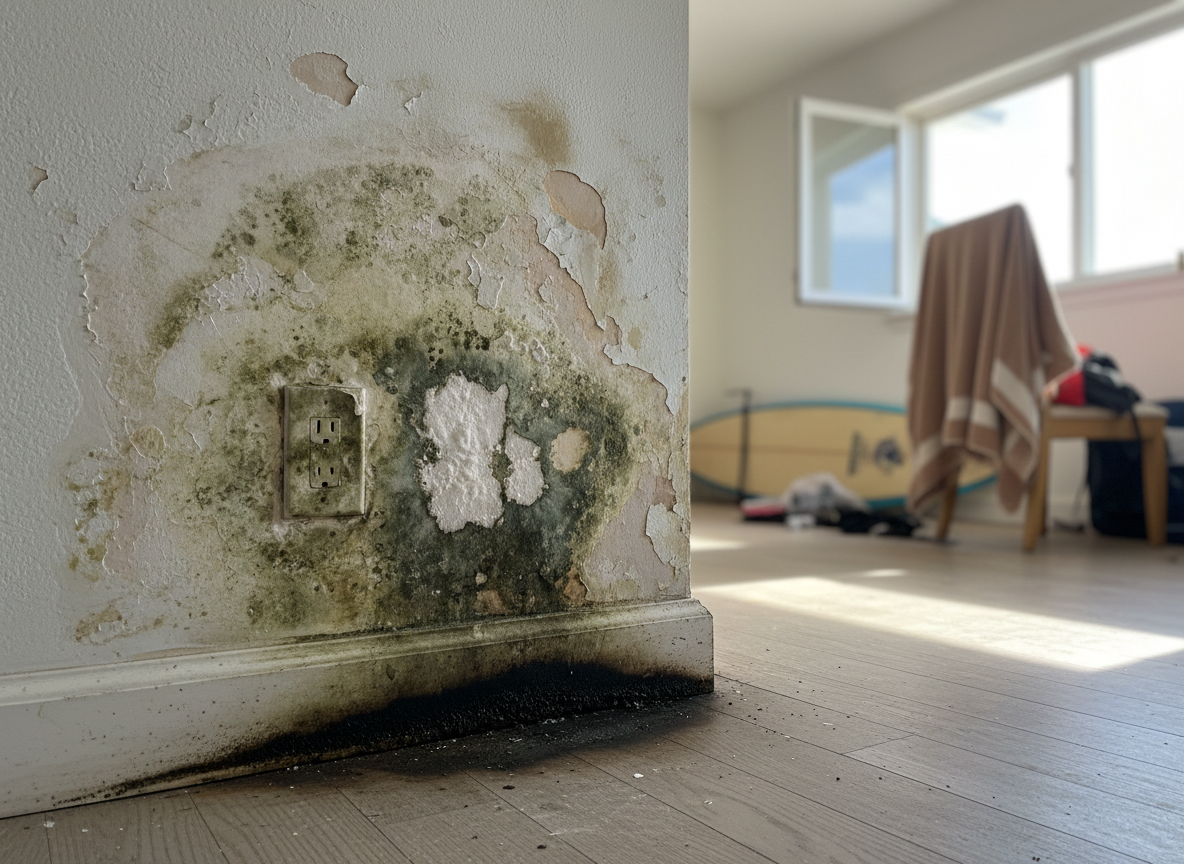
Winter rains in Solana Beach commonly produce visible mold growth within 24-48 hours in homes that experience roof leaks, window condensation, or crawl-space moisture intrusion, especially in older single-story properties built before 1980 in Lomas Santa Fe and Solana Highlands.
How Coastal Winter Rains Create Persistent Moisture
Solana Beach receives most of its annual rainfall between December and March, yet the mild coastal Mediterranean climate keeps relative humidity above 70 percent for weeks afterward because of the ocean influence. This combination prevents rapid drying in homes near Fletcher Cove Park or along the Solana Beach Coastal Rail Trail. Water that enters through tile roofs or stucco cracks stays trapped in wall cavities and subfloors far longer than it would in drier inland parts of San Diego County. Properties within a half-mile of San Elijo Lagoon face additional vapor pressure from the estuary, which pushes moisture upward into living spaces during high tides and heavy downpours. Homeowners in Downtown Solana Beach often notice musty odors first in bathrooms and laundry rooms because those rooms share walls with exterior exposures that never fully dry between storms.
Neighborhoods and Housing Types Most Affected
Homes in Lomas Santa Fe and Solana Highlands typically feature raised foundations with crawl spaces that collect rainwater runoff from the surrounding hillsides. These 1960s and 1970s builds often lack modern vapor barriers, allowing soil moisture to migrate into framing members after each winter event. In contrast, newer townhomes near the San Elijo Lagoon Ecological Reserve sit on slabs but still develop mold around sliding-glass doors when wind-driven rain soaks the stucco. Residents in Encinitas and Del Mar experience similar patterns, yet Solana Beach properties face extra risk from salt-laden air that corrodes metal flashing and accelerates leaks. Carlsbad homes farther north tend to dry faster because they sit higher above the water table. Checking attics and under sinks within 72 hours of any storm remains the most reliable way to catch growth before it spreads across drywall.
Practical Detection Steps After Rainfall
Start by inspecting ceilings below roof valleys and around skylights for new discoloration. Use a moisture meter on baseboards in rooms facing the prevailing westerly winds, which carry rain against the coastal side of homes. Pay special attention to HVAC return vents that pull air from crawl spaces, as spores often travel through ducts after flooding. If readings exceed 15 percent moisture content on wood framing, professional assessment becomes necessary. Linking this inspection to a full mold remediation near me evaluation helps identify hidden colonies before they affect indoor air quality. Documenting conditions with photos taken the same day as the rain event provides useful records for insurance discussions later.
Remediation Practices Suited to Local Conditions
Effective removal in Solana Beach requires addressing both the visible growth and the underlying moisture source created by winter rains. Technicians typically remove affected drywall sections at least 18 inches beyond visible mold, then apply antimicrobial treatments to joists that remain damp from lagoon proximity. In crawl spaces common to Lomas Santa Fe homes, crews install temporary dehumidifiers running at 50-55 percent relative humidity until wood moisture drops below 12 percent. For properties near the Solana Beach Coastal Rail Trail that experience repeated wind-driven rain, sealing exterior penetrations with elastomeric coatings prevents recurrence. Water damage mold remediation protocols used here differ from inland jobs because salt residues must be rinsed from surfaces before drying begins. Follow-up clearance testing confirms spore levels match outdoor baselines before reconstruction.
Prevention Measures That Withstand Future Storms
Installing ridge vents and powered attic fans reduces condensation that builds after warm winter days followed by cool nights. Adding French drains around foundations in Solana Highlands directs runoff away from crawl-space vents. Homeowners near San Elijo Lagoon benefit from monthly checks of sump pumps and dehumidifiers set to activate at 60 percent humidity. For readers wanting deeper detail on kitchen and bath vulnerabilities, see the related post on how local climate affects mold in Solana Beach kitchens and bathrooms. Another useful resource covers post-storm mold checks for homes near San Elijo Lagoon. Scheduling an annual inspection before the rainy season starts keeps small issues from becoming widespread growth after the next series of winter fronts.